Exploring how the connection between our surroundings may affect our relationships and emotional well-being.
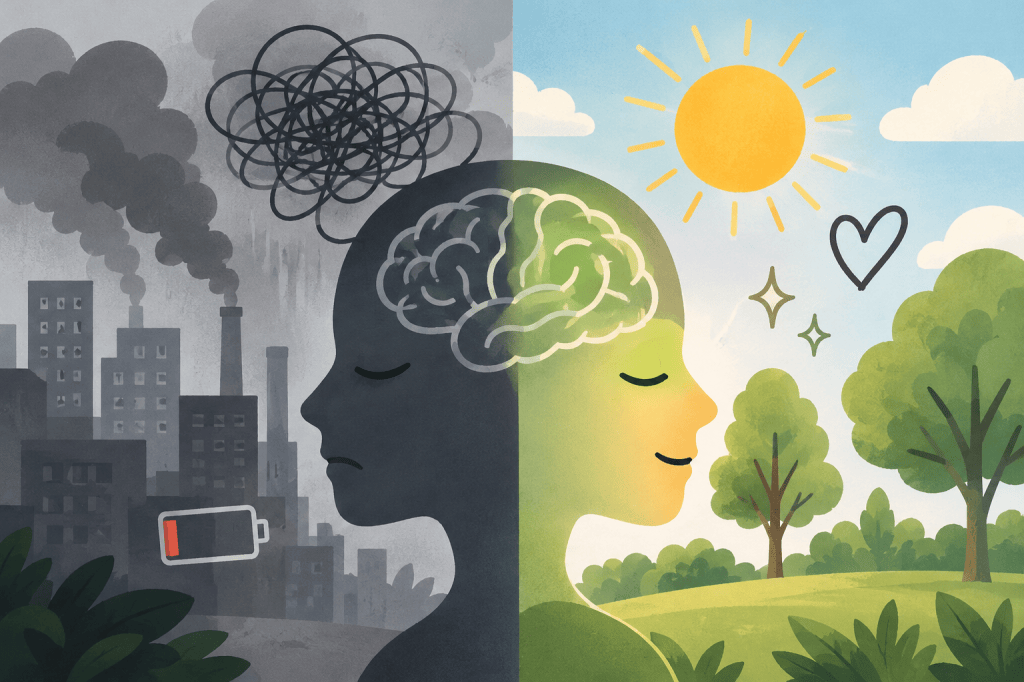
For most, its easy to misunderstand the idea of how much our surroundings influence daily lives. The environments that we mostly spend our time in can effect the moods, motivation and just the overall mental health of an individual. An example of this can be the difference in studying when you’re either in a cluttered, noisy and stressful environment, versus when you’re in a clean, quiet and comfortable space. On one hand, the environment makes things difficult to focus, which can generally result in poor work or even zero comprehension of whatever content you may be studying. On the other hand, it’s essentially allowing you to capitalize on how much information you can take in a relaxed space. This all results in either, you feeling like you’re falling behind which can potentially make someone feel panicked or stressed, contradictory to those who’ve been able to maintain a level head due to studying without environmental difficulties.
The American Psychiatric Association had spoke about this matter on their website under, “Social Determinants to Mental Health: Physical Environment”. They essentially gave us an insight as how important it is to be aware of our surrounding, especially in the long run as it has the potential to worsen theuir “worsen mental health outcomes”
“The physical environment, including air quality, noise levels, and green spaces, influences mental well-being. For example, exposure to environmental toxins, such as lead or high levels of air pollution, is linked to increased risks of depression and other psychiatric disorders. (American Psychiatric Association.n/a)
This shows readers that our environment is not something that should be taken lightly as if its just what we see around us, but instead, try to zone in on how it’s making you feel and if that may be a red flag in the long run.